نیا معمول؟ بھارت-پاکستان کشیدگیاں اور عالمی امن خطرے میں
یہ بلاگ اس بات کا جائزہ لیتا ہے کہ بھارت کی "نئے معمول” کی پالیسی کس طرح پاکستان کو صرف دہشت گردی سے جوڑ کر پیش کرتی ہے اور دونوں ممالک کے درمیان کشیدگی کو بڑھا سکتی ہے۔ اس پالیسی کے ممکنہ علاقائی اور عالمی اثرات کو سامنے رکھتے ہوئے، مضمون میں بتایا گیا ہے کہ یہ رویہ جنوبی ایشیا میں امن و استحکام کے لیے کس قدر خطرناک ہو سکتا ہے۔ مکمل تجزیے کے لیے بلاگ ملاحظہ کیجیے۔
New Normal? India-Pakistan Tensions and Global Peace at Risk
The May 2025 escalation between India and Pakistan stems from India’s attempt to establish a ‘new normal’: every “terrorist” attack on Indian soil will trigger a conventional military response, striking deep within Pakistan, beyond the Kashmir region. Each response will be more severe than the last, aiming to damage Pakistan’s military capabilities, compel action against what India calls “terror infrastructure,” and challenge Pakistan’s nuclear deterrence.
India’s ‘new normal’ equates assumptions with proof, treating any terror attack as definitive evidence of the Pakistani state’s involvement. This undermines the need for concrete evidence and sets a dangerous precedent for state behavior when both states are nuclear-armed.
Peace-threatening problems with the ‘new normal’
The ‘new normal’ seemingly assumes that Pakistan will not respond militarily to attacks on its sovereignty, a notion Pakistan has firmly rejected, vowing to respond ‘swiftly and brutally.’ Following the February 2019 terror attack in Indian-occupied Kashmir, India conducted airstrikes in Azad Kashmir. Pakistan intercepted the attacking planes, shot one down, and captured the pilot, later releasing him as a peace gesture. In April 2025, after another terror attack in Indian-occupied Kashmir, India accused groups allegedly based in Pakistan and launched ‘Operation Sindoor,’ targeting sites in Azad Kashmir and across international borders in Pakistan, resulting in over 30 civilian deaths. In response, Pakistan initiated ‘Operation Bunyaan ul Marsoos,’ striking Indian military installations. The four-day crisis ended after US President Donald Trump negotiated a ceasefire between the two countries.
Dangerous new path to escalation
India’s ‘new normal’ unjustifiably reduces Pakistan to a state defined solely by terrorism and eliminates any distinction between state-sponsored and non-state actors. South Asia is home to numerous militant groups with ties to rival intelligence agencies. A terrorist group seeking to ignite war between India and Pakistan could exploit the ‘new normal’ policy by orchestrating a terrorist incident to provoke war between the two countries. This dangerously lowers the threshold for an escalation between the two countries.
Lack of a crisis management mechanism
The danger is heightened by the lack of a crisis management mechanism between the two countries. Without it, and with reckless actions based on unclear evidence, the international community has little time to intervene. While Trump managed to defuse the latest crisis, future situations may escalate before global powers can respond.
India’s role in covert actions
The ‘new normal’ completely ignores Pakistan’s claims that India supports terrorist groups like the Tehreek-e-Taliban Pakistan (TTP) and Baloch Liberation Army (BLA), which have killed thousands of Pakistani civilians and soldiers. For instance, a BLA attack on a school bus killed several children on May 21, 2025. Pakistan has attributed the attack to India.
Threatening the entire population of Pakistan
As a part of the ‘new normal,’ the extremist Hindutva-driven Indian government has blurred the line between PakIstani citizens and terrorists. In India’s May attack on Pakistan, 31 civilians, including women and children, were killed, with no expression of regret from India. Instead, Indian Prime Minister Modi publicly threatened the people of Pakistan with Indian bullets, stating, “Live a life of peace, eat your bread, or else my bullet is always an option,” a remark met with applause from the Indian crowd.
Outcome
Global sympathy leaned toward India after the April 2025 terror attack, and it was widely condemned, but no country, including the US and EU members, blamed Pakistan due to absence of evidence. Pakistan has called for an impartial investigation, which India has rejected. Although forces of both countries returned to their original positions as they were before the April 25 attack, the chances of escalation between the two remain high. India’s approach is not only unhelpful in addressing terrorism but has also increased the risk of military escalation.
A peaceful way forward for both states should be to prioritize dialogue and international cooperation to address disputes. Additionally, they should engage their intelligence authorities in discussions to address accusations of covert operations.
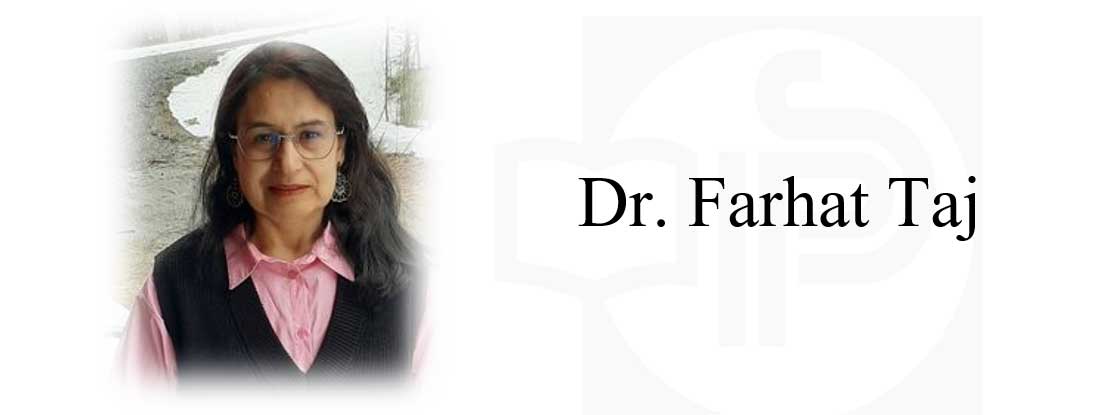
Dr. Farhat Taj is an associate professor at the University of Tromsø, UiT The Arctic University of Norway. She can be reached at farhat.taj@uit.no